
Saturday, January 1, 2011
New Year's Day
I cleaned the snow off the cold frames yesterday (New Year's Eve) because we are having a warm spell (around 50 degrees). I took the covers off today so that the rain could reach the plants and then covered them at sunset (which is currently 4:36). There hasn't been any noticeable growth, which is not surprising considering that the glass has been covered with snow for at least three weeks. I was a little surprised that the mache plants hadn't grown at all because they are supposed to grow through the winter - but apparently that requires more light than passes through several feet of snow.
Yesterday was a sunny day. The soil temperature was around 45 degrees in each of the cold frames that I tested.
It will get cold again tomorrow, although the day time highs will be around freezing for the next few days. I plan to put the foam covers on the two frames that have them and will remove the covers if it is to be a sunny day. If it snows I will probably let the other two frames be covered with snow. The fifth frame, where I have always planted lettuce, remains covered with snow since I know that the lettuce isn't going to grow until March and it is not large enough to pick. I am hoping to pick a little kale from the frames sometime this winter. The kale plants look good.
The only plants that look like they haven't survived are some small arugula transplants. I don't think they were large enough, but who knows if they are just sitting there waiting for better conditions.
Indoors, we had our second picking of lettuce from the plants in the cellar. This time I only harvested leaves from one of the original three trays and got just a little over three ounces, about the same as I picked from all three trays earlier.

Thursday, December 16, 2010
The End and the Beginning
 We have reached two boundaries. One is the end of outdoor produce and beginning to grow a little of something indoors. The other is beginning to draw down what is in storage.
One example of using what is in storage is the potato-pepper-onion meal. The potatoes and peppers are from the garden. I stored the potatoes in the cellar, but noticed that they are beginning to sprout. That means that they will begin turning soft fairly soon. The peppers were blanched and frozen when we had more than we could eat. The onions would have been scallions from the garden, but with some 40 inches of snow they weren't available.
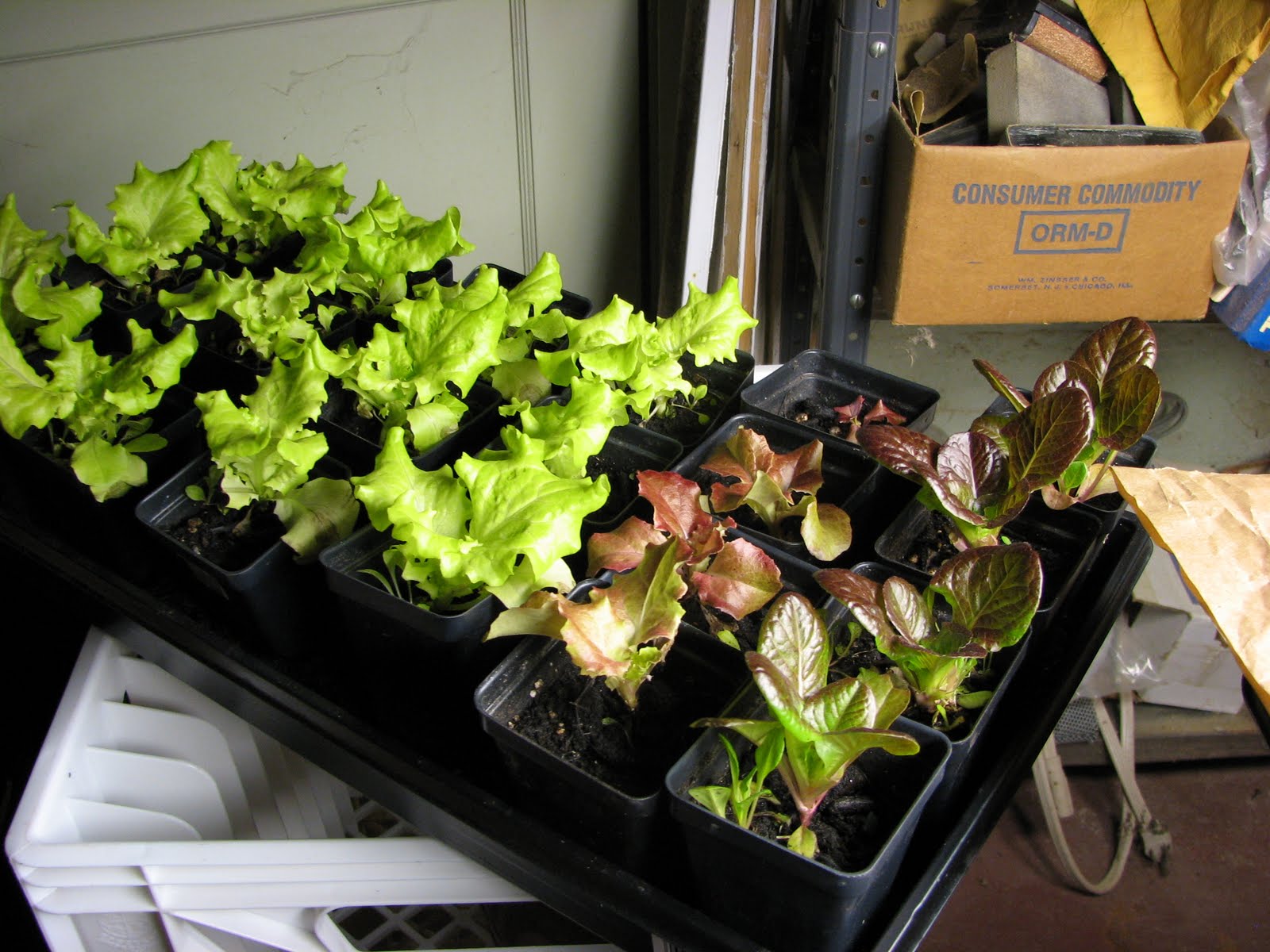 As for trying to grow something, one experiment this year is to grow some lettuce under lights in the cellar. I currently have four trays under two fluorescent fixtures. I harvested a grand total of slightly less than three ounces of little leaves last week. I expected the lettuces would grow larger (and perhaps they will) but since they have a fairly deep root and are in little pots I now think this experiment fail to produce enough to justify the time and electricity (about one kWh per day). I did later add some potting soil to the bottom of the tray so that the roots that have grown out of the bottom of the pots have a place to expand. But I think the real answer would be to plant the lettuce in much deeper containers and that means more potting soil and fewer plants in the same space.
The other source of produce from the garden in the winter is what is in the cold frames outside (kale, mache, claytonia and lettuce). I haven't seen what is happening out there for over two weeks because of the snow. But that provides an opportunity to see what happens when the cold frames remain covered with snow for a long time.
Wednesday, December 8, 2010
Stuff That Didn't Do So Well
I wrote about some of the vegetables that grew much better in 2010 than in 2009. A few things did not do as well.
I harvested a lot less garlic but that was intentional because we couldn't use the 18 pounds from 2009. This year's 6 1/2 pounds is more than enough. We picked no asparagus because the new bed was just planted last year. I harvested 29 pounds of potatoes compared with 41 in 2009 but they were bigger and I only planted half as many seed potatoes. I got no fava beans. I think they were shaded out by cucumbers growing all over and through them.
Sadly, we picked only 11 pounds of blueberries compared with 23 pounds in 2009. One reason is that the birds finally discovered that they like blueberries but the major reason was that the plants just didn't produce as much. It also looks like they have very little new growth which means next year will be worse. We have alkaline soil and blueberries like acidic soil. I add sulfur a couple of times a year and mulch the plants with oak leaves and pine needles, but I obviously need to buy a kit to test the pH of the soil. How to amend the soil around blueberries is a good winter research project.
Tuesday, December 7, 2010
The Tally for the Year
It started to snow a couple of days ago and we have a lot of snow - probably 18 inches so far. Harvesting had been sparse with just some kale every four or five days. But now the regular harvesting season is over.
Last year we weighed about 360 lbs of produce and this year I had the figure up to 710 until I discovered that one day I entered 1300 ounces of kale instead of 13. The final tally for 2010 is a little over 650 lbs. Where did the 80% increase come from?
The major increase was summer squash. Last year I confidently relied on row cover material to keep squash vine borers off my two young patty pan plants (photo at left) but once I removed the row cover material so that the flowers could b
 e pollinated the borers moved in and I hadn't started any back-ups. The total harvest was about 20 pounds. This year I started five plants and had two back-ups and I wrapped strips of cheese cloth around the stems of the young plants (photo below). This didn't totally work because they were eventually infected and I harvested my last squash in early October. But in the meantime we had 109 pounds of squash. I gave some away but we frequently had sauteed squash for supper.
Cucumbers were another success. Both years I grew lemon cucumbers, but in 2009 the few plants I started produced nothing edible. This year I started them indoors and planted them all in one place. They took over that area and produced 47 pounds before they succumbed in mid-September to cucumber beetles(?). I am still eating pickles from the cucumbers.
Pole beans were another big improvement. Last year groundhogs and a deer fed on the beans at various times and heights. This year I saw one groundhog, called a trapper, and never saw a groundhog for the rest of the summer. I successfully fenced the deer out by adding three feet of deer fencing to the existing five foot fence. I also started a lot more beans and we ended up with 79 pounds of beans compared with 30 pounds.
Tomatoes rebounded this year because we were not troubled by late blight. I planted four of my six plants in containers, using soil that hadn't been used for vegetables before. We collected 55 pounds compared with 21. Containers, I discovered, do have to be watered at least daily and sometimes two or three times in the very hot weather. One plant had blossom end rot which continued all summer.
We concentrated on growing more greens and harvested about 137 pounds of various greens (not including lettuce). Last year the total was 101 pounds.
A few words about what we grew less of in the next post.
Sunday, October 17, 2010
A Lovely Day in the Garden
It is October 26th and we haven't had a frost yet and the forecast in the newspaper doesn't show one for the next week either but production in the garden has slowed way down. [Our typical date for the first frost is October 10th.] There now is not much left in the garden other than greens. The beans have been pulled up, along with the ground cherries, all but one tomato plant (I just didn't get to that yet), and I finished the peppers yesterday.
I've begun working on the next season - winter. I've had what I call the "lettuce frame" for four or five years. It is a somewhat rickety frame from old fence slats with a large piece of glass on top. I plant lettuce in it in the fall and it remains covered with snow during the winter until about March when the snow melts off and the lettuce starts growing again. This past winter I built three new cold frames, two of which were insulated and the other made again of old cedar fence slats. Yesterday I cut more fence slats and made my biggest frame. At 80 inches long it was a little difficult to get out of the cellar. We placed it over the kale that was planted earlier. Here it is. It was seventy degrees today so I haven't brought out the two pieces of glass that will cover the top.
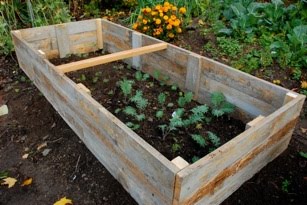 Last year the kale survived without being covered but I am told that might not happen every year. I think it was protected by the heavy snow. In the other cold frames I have lettuce, mache - some that was started indoors and some that was sowed in the soil in the frame, claytonia, and some more kale. In whatever space is left I will plant a few arugula seedlings, seed a few rows of spinach and more mache (also known as corn salad). Mache is the one thing that is supposed to keep growing during the winter. This will be our first winter to see how the cold frames work.
This was a good year. Few pests, lots of fruits and vegetables. In terms of produce we have brought in more than 620 lbs this year. What I counted last year was 370 lbs. Later I'll report on the weight for various vegetables (and fruits). The big increase this year was from squash, tomatoes, cucumbers and beans. We will pick kale and other greens as long as we can and then it will be time to start using the fruit and vegetables that we froze, or dried, or made into jam. We do still get a few raspberries each day but they get popped into mouths before they can be weighed.
Sunday, September 5, 2010
Busy, busy summer. What now?
In the last entry I was commenting on the changes in the garden from spring to summer. Now the changes to fall are already beginning. There has been a lot of activity in the meantime, most of which was not in the garden itself.
We have been freezing what we can't eat (beans, spinach, kale, squash, and tomato soup) and have already begun making jam (strawberry and currant (jelly) in June and peach and grape more recently. Except for the currants none it was from our garden.) We have also been dehydrating melons and apples.
A large portion of our meals comes from the garden. That involves quite a bit of washing produce and cooking. Eating always takes less time than the preparation.
Parts of the garden are becoming available. The potatoes, garlic, soybeans, and most of the lettuce have been harvested. I pulled out the broccoli because it was producing too little for the space required. A couple of the summer squash were done in by squash vine borers (but I know what I need to do next year). The early cucumbers have dried up and been removed and I have to admit I don't know what causes that. But they were incredibly productive for many weeks.
A couple of weeks ago I sowed some spinach, lettuce and kale in the empty spaces, along with transplanting some Chinese cabbages, Brussels sprouts and collards. But the very warm weather of this summer continued and the lettuce and spinach pretty much died out. Yesterday I transplanted a bunch of kale and some Chinese cabbages and expect the cooler weather will be good for them.
When truly empty spaces begin to appear it is time to start a cover crop. I have also seen the suggestion that cover crops can be started around existing plants like tomatoes and peppers and the cover crop will be started when those crops are done.
I will be planting mostly winter rye and perhaps a little bit of clover. Clover should be planted at least four weeks before the first frost but winter rye can be planted up to the time of the first frost. Where I am adding compost I need to dig that in before scattering the cover crop seed. For areas that only become empty after a frost I will just cover them with a layer of compost (or straw) and leave that until spring.
Since I now have four cold frames I need to identify soon where those will go and begin starting the plants that will go in them. This will be my first year to try and have some greens that I can go out and harvest during the winter. Since those plants will stop growing (except mache) when it gets really cold inside the frames I will want to have them started soon enough to reach full growth by early December. So there is still a lot of work to be done.
Monday, July 5, 2010
Transition From Cool to Hot Weather

Each year brings a different set of creatures wanting to share in the harvest of the garden. Last year our major pests were a deer, several groundhogs, and innumerable snails and slugs. This year both the deer and the groundhog made one appearance, did no damage, and neither has been seen since. The snails and slugs will always be here but they limit themselves to certain vegetables - mostly Asian greens - and while they can destroy large sections of leaves they can't keep up with the growth of the plants. I do try to limit their efforts and one method is to spread crushed egg shells around the plants. A recent planting of Chinese cabbage and pak choi looked like this. I don't yet have sufficient observations to say whether the egg shells work. The plants when transplanted didn't look so great because something was chewing on them while they were outside hardening off.
This year the birds - especially catbirds and robins - have taken a clear liking to our blueberries. They simply fly in, eat or peck a few, and fly away. We really like our blueberries and believe we offer enough other food for the birds - service berries (pretty much gone now), bayberries, and Pagoda dogwood berries (not quite ripe yet) - that they should leave the blueberries for us. Since telling them that seemed unlikely to be effective I built a frame of 7 foot PCV pipes set over 2 foot rebar and tied deer nettin
 g to it. It isn't elegant and there are some gaps in it but it has been fairly effective. Two young robins - or one young robin twice - have had to be released but they seem to have learned to not wander in. Same with one cardinal. The catbird just walked under the bottom edge of the netting and took what he wanted and then walked back out again. I pushed the piping down into the soil a few inches and added some more tent pegs to hold down the bottom and that may have worked.
The garden has gotten to the point where the excess of greens - spinach, zen and lettuce - is under control. What that really means is that they started to bolt and are in the process of being replaced. The spinach was finished about ten days ago but we now have some New Zealand spinach available. But we ended up with a fair amount of frozen spinach. Lots of zen has been also been frozen for eating during the winter. The Chinese cabbages have been used or frozen and replaced with the new bed in the top photo. I planted quite a bit of lettuce and am now pulling that out as I pick it for lunch and have started more. We had our first patty pan squash yesterday and more are on the way. The pole beans are just beginning to flower so it will still be a while before we can eat beans. I do have them planted in five different areas, so we will have enough to freeze - I hope. I didn't grow bush beans, but I will next year. The tomatoes, which are a little behind, do have small tomatoes on them but they won't be ready for another three weeks. The ground cherries are forming but they all will be frozen and then used to make our favorite jam when we have enough.
Between the abundant lettuce and the kale and other greens we have enough to have a salad for lunch and cooked greens for supper. I am still waiting for broccoli to form heads as a partial replacement for lettuce at lunchtime. But most of all I wait for tomatoes for my daily in-season tomato sandwich.
Hopefully I can keep up with the very hot days we are having and keep the plants watered. Whoever told me earlier that container plants have to be watered two or three times a day in this heat was right.
Subscribe to:
Posts (Atom)